
Restorative dentistry in Truro
Treat the cause.Keep the tooth.
Root canal treatment removes inflamed or infected tissue from inside a tooth. The canals are cleaned, disinfected and sealed so the tooth can remain in place where this offers a predictable option.
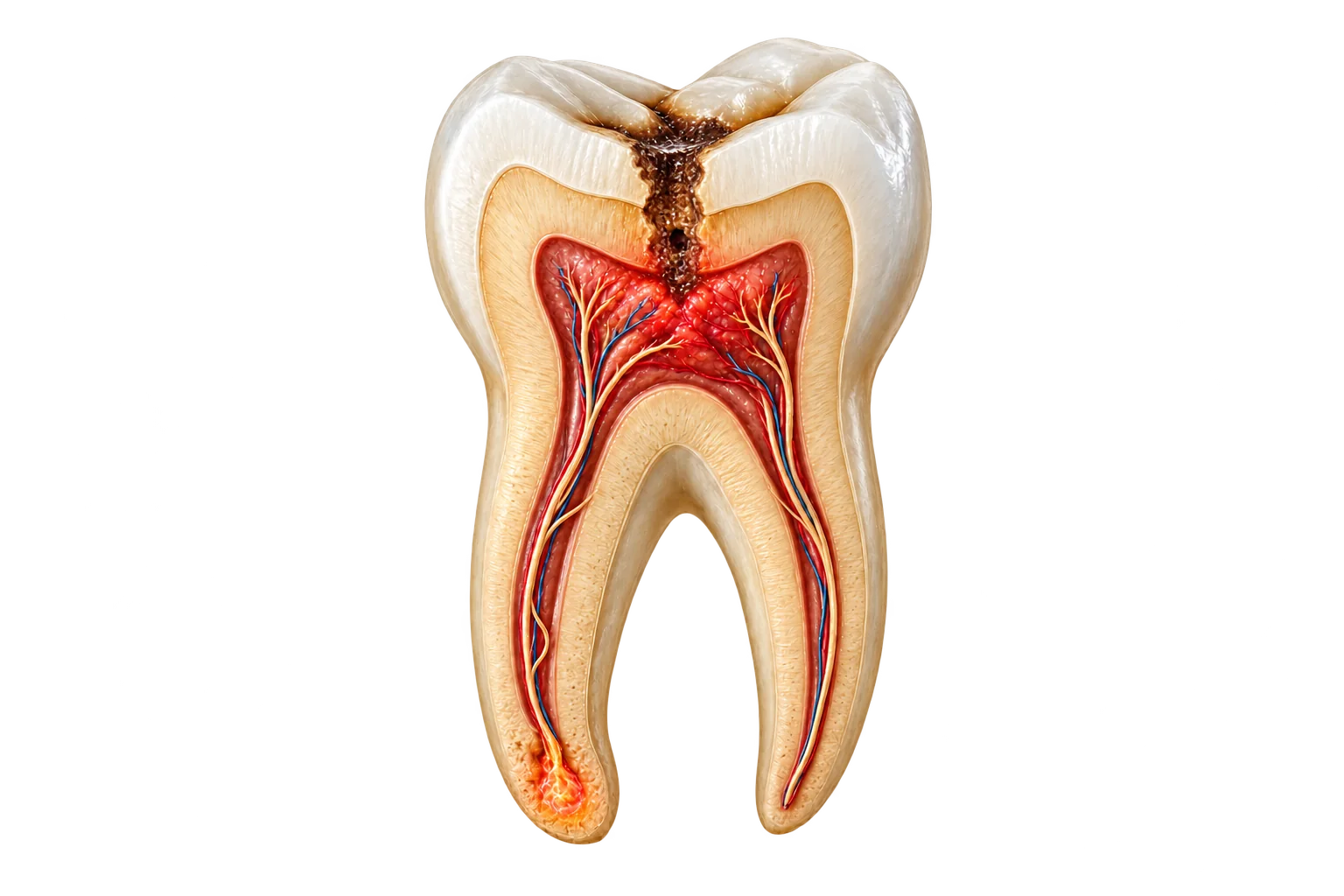 DecayExtending towards the pulpEnamelThe hard outer layerDentineThe supporting tooth structureInflamed pulp / nerveThe living tissue inside the tooth
Pain is one clue. It is not the diagnosis.
Deep decay, a crack, trauma or a leaking restoration can inflame or infect the pulp inside a tooth. Some teeth become painful, while others change quietly and are found during an examination.
Before recommending root canal treatment, we assess the pulp, roots, surrounding tissues and whether the tooth can be restored well afterwards. We will explain the diagnosis, alternatives and expected outlook before you decide.
In selected vital teeth where the pulp may still heal, Biodentine vital pulp therapy may offer a more conservative way to preserve living tissue.
Lingering sensitivity
Hot or cold pain that continues after the stimulus has gone is worth assessing.
Pain on biting
Tenderness or pressure may come from inflammation, a crack or another dental problem.
Swelling or a gum spot
Swelling, a bad taste or a recurring spot on the gum can be linked to infection around a root.
The treatment pathway
Clean. Seal. Protect.
Each stage matters. The exact number and length of appointments depends on the tooth, its anatomy and whether it has been treated before.
Confirm the diagnosis
We examine the tooth, review suitable X-rays and decide whether it can be predictably restored.
Numb and protect
Local anaesthetic makes the tooth numb. A rubber dam isolates it from the mouth.
Clean and seal
The canals are carefully located, shaped, disinfected and filled to help prevent reinfection.
Rebuild the tooth
A secure filling, onlay or crown protects the remaining tooth according to its structure and bite.
Carefully controlled treatment
Small spaces need precision.
Root canals are narrow and may curve, branch or be difficult to find. Magnification, suitable imaging and careful cleaning help us treat the internal space while preserving as much sound tooth as possible.
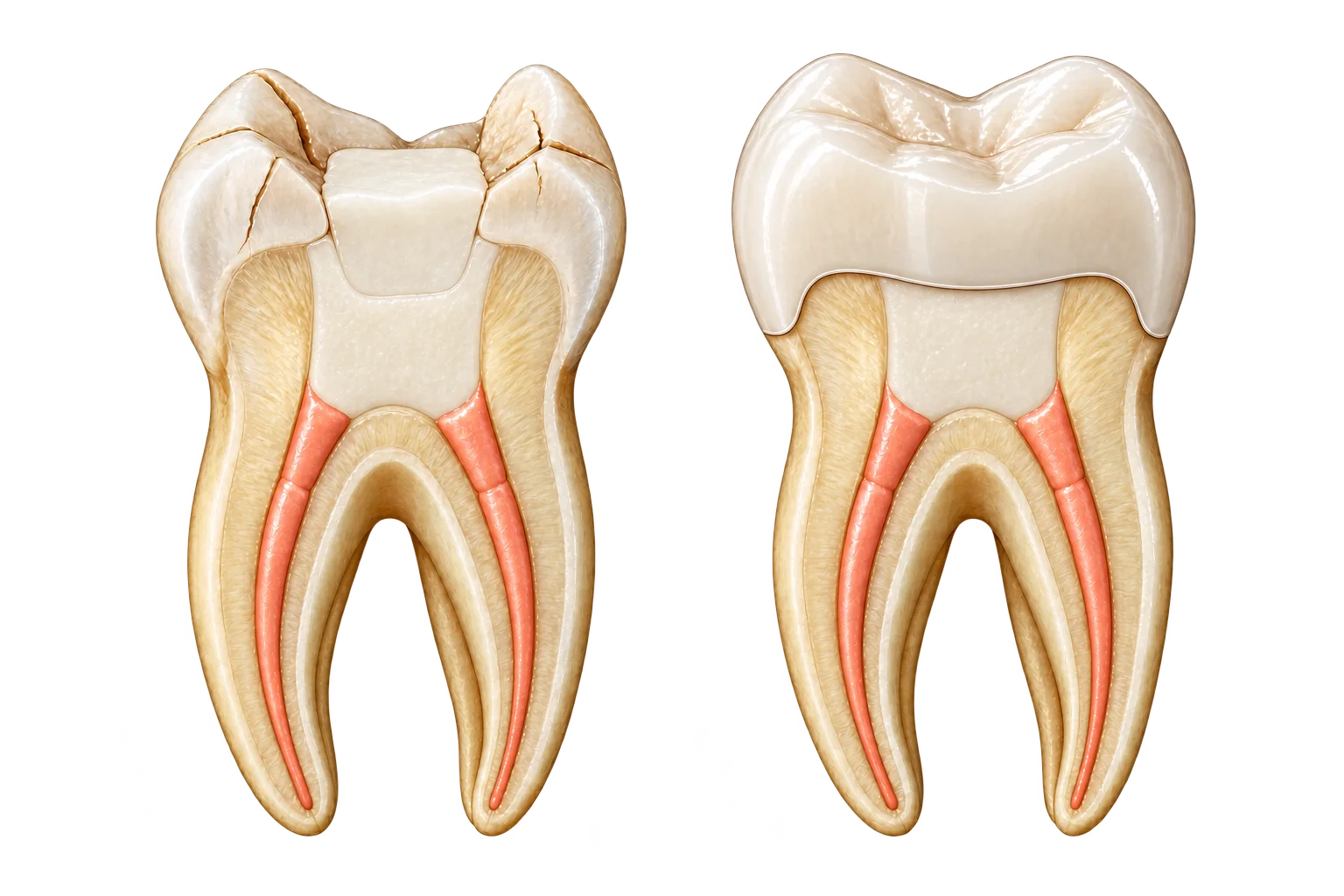 Root filling + access sealFull ceramic crown
After root canal treatment
The restoration is part of the treatment.
The coral material represents gutta-percha filling the cleaned canals. A bonded filling or core seals the entire access above it before the final restoration. This coronal seal helps prevent bacteria entering again, while an onlay or crown can protect weakened tooth tissue during biting.
Related care
One tooth, several possible routes.
The right option depends on the diagnosis, remaining tooth and your wider treatment plan.
Common questions
Root canal FAQs.
Will root canal treatment hurt?
The tooth is made numb with local anaesthetic, so you should not feel pain during treatment. You may notice pressure or movement. Some tenderness afterwards is normal and should gradually settle.
What is a rubber dam?
A rubber dam is a small protective sheet placed around the tooth. It helps keep the canal system clean and dry, prevents saliva entering the tooth and protects your mouth during treatment.
How many appointments will I need?
Some teeth can be treated in one visit. Others need two or more appointments, particularly when there is infection, complex anatomy or previous root canal treatment. The final restoration may be a separate appointment.
Will I need a crown afterwards?
Not every root-filled tooth needs a crown. Back teeth and teeth with missing walls more often need an onlay or crown to protect weakened cusps. We will assess the remaining tooth and your bite before recommending a restoration.
Does root canal treatment always work?
No dental treatment is guaranteed. Canal anatomy, infection, cracks, previous treatment, the final restoration and maintenance all influence the outcome. If symptoms or infection persist, options may include retreatment, apicectomy or extraction.
What if the tooth has already had root canal treatment?
A previously treated tooth can sometimes be retreated, but removing old materials and locating missed or altered canals can be more complex. We will assess the restoration, roots and surrounding tissues and explain whether retreatment, apicectomy or another option is reasonable.
Will I need X-rays?
Yes. Suitable dental X-rays are normally needed to diagnose the problem, understand the roots, check treatment and review healing. For selected complex teeth, a three-dimensional CBCT scan may be considered when the extra information could change the treatment plan.
Start with a diagnosis
Concerned about a tooth?
Book an examination so we can assess the tooth and explain the sensible options. If you have significant pain or swelling, please call reception so we can guide you to the right appointment.