
Crowns and onlays in Truro
Protect the tooth.
Preserve what matters.
A crown or onlay is made outside the mouth and fitted to a prepared tooth. The aim is to restore strength, shape and function while keeping as much sound tooth as the situation allows.
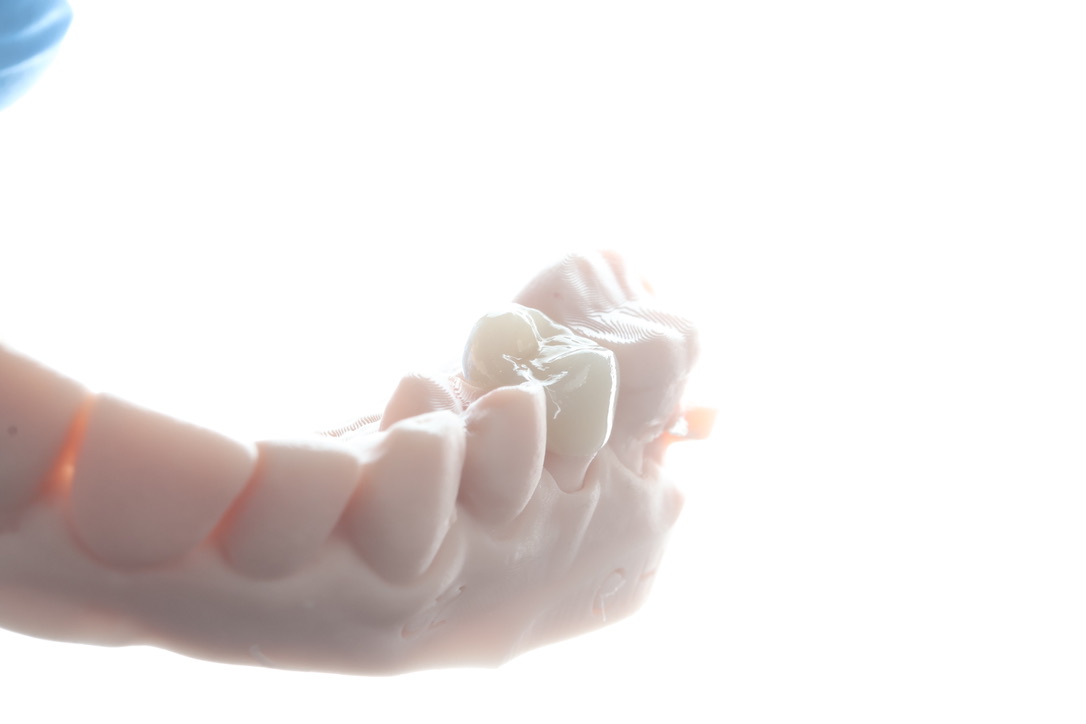
Crown or onlay?
Coverage should match the tooth.
The decision is based on the damage, remaining walls and cusps, previous restorations, bite and whether the tooth has had root canal treatment.
Onlay
An onlay replaces the damaged biting surface and covers one or more weakened cusps. It can preserve more natural tooth than a crown when the remaining structure is suitable.
Partial coverage
Crown
A crown surrounds the full visible part of the tooth. It may be considered when damage, cracks or previous restorations leave less reliable support.
Full coverage
Choosing carefully
The smallest predictable restoration.
What remains?
Strong walls and cusps may allow a more conservative bonded restoration.
How is it loaded?
Tooth position, bite and grinding influence design and material choice.
Is more care needed?
Decay, cracks, gum health and the nerve are assessed before the final restoration.
Materials
Selected for the tooth and the job.
Zirconia
A strong tooth-coloured ceramic often used where durability and support are priorities.
Emax
A glass ceramic with natural optical qualities, used where bonding and appearance suit the case.
Metal or gold
A selected option where function, available space or a patient preference makes it appropriate.
How appointments work
Usually two treatment appointments.
Plan
At your examination, we assess the tooth, bite and gums and explain the suitable options.
Prepare
At the first treatment appointment, the tooth is prepared and digitally scanned or impressed.
Laboratory
A temporary restoration protects the tooth while the final one is made. This is usually around two weeks.
Fit
Around two weeks later, we check the fit, appearance and bite before securing the restoration.
After root canal treatment
Protection depends on what remains.
A back tooth can be more vulnerable after root canal treatment, especially when cusps or walls are already missing. An onlay or crown may be recommended, but the right restoration still depends on the remaining tooth and bite.
Indicative fees
One starting fee for either approach.
Examination, X-rays, core build-up, post and core or root canal treatment are separate where required. Gold carries an additional laboratory cost and is quoted individually. A written estimate is provided before treatment. View our full price guide.
Questions
Crown and onlay FAQs.
Is an onlay better than a crown?
Not automatically. An onlay can preserve more tooth where enough sound structure remains and reliable bonding is possible. A crown may be more suitable when damage is more extensive. We choose the smallest predictable restoration for the individual tooth.
Will I need root canal treatment first?
Usually not. Root canal treatment is only considered when the dental pulp is irreversibly inflamed, infected or the nerve is no longer alive. Symptoms, examination and suitable tests guide that diagnosis.
Will I have a temporary crown or onlay?
Usually, yes. A temporary restoration protects the prepared tooth while the final restoration is made. It is not as strong as the final restoration, so care is needed with hard or sticky foods.
How long will it last?
With careful planning, good daily cleaning and regular reviews, crowns and onlays can serve well for many years. Their lifespan varies with the remaining tooth, bite, grinding, gum health and decay risk. We will show you how to protect the restoration and check it as part of your ongoing care.
Can a crowned tooth still decay?
Yes. The natural tooth remains beneath the restoration and can develop decay at its edge. Daily cleaning, fluoride toothpaste and regular reviews remain important.
What happens if a crown or onlay comes loose?
Keep it safe and contact the practice. We need to assess the restoration and tooth before deciding whether it can be refitted or needs replacement. Please do not use household glue.
A damaged or heavily restored tooth?
Start with an examination.
We can assess the tooth, explain whether a filling, onlay or crown is suitable and provide a written treatment estimate.