
Porcelain veneers in Truro
Refine what shows.
Preserve what matters.
Thin Emax ceramic, individually planned around your smile, your bite and the health of the tooth beneath.
A considered choice
A veneer changes the visible surface of a tooth. The best plan begins by asking whether it is needed at all.
We look at tooth health, enamel, gums, bite and the change you would like to make. Whitening, alignment or composite bonding may sometimes achieve the result more conservatively.
One aim. Several routes.
Start with the change you want.
Change shade
Whitening
Lightens natural teeth without covering them.
Change position
Alignment
Moves teeth rather than masking their position.
Add shape
Composite bonding
A repairable, additive option in suitable cases.
Change surface
Porcelain veneer
Thin ceramic with carefully controlled colour, texture and form.
The pathway
Designed before a tooth is prepared.
Each stage should make the next decision clearer.
Assess
We understand the result you want, then assess your teeth, gums, bite and smile as a whole.
Preview
Photographs, scans and a digital or physical preview can help you explore shape before irreversible treatment.
Prepare
If veneers are chosen, the teeth are prepared as conservatively as the agreed design allows and accurate records are taken.
Try and bond
Appearance, fit and bite are checked before the final veneers are bonded and your care plan is explained.
Emax ceramic
Thin ceramic. Carefully bonded.
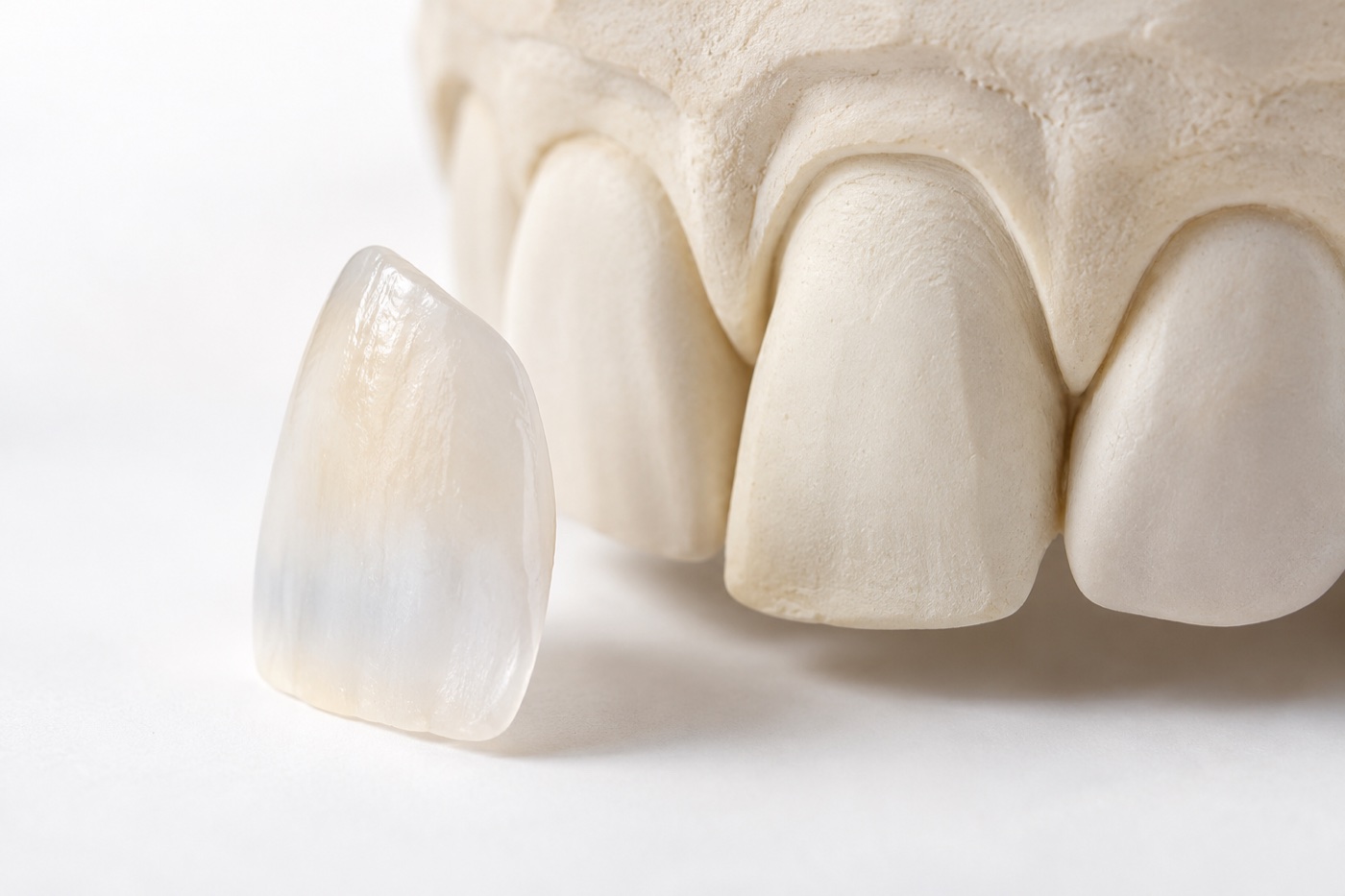
A veneer is a very thin ceramic shell bonded to the visible front of a tooth. It can change shape, shade and surface detail while preserving as much natural tooth as possible.
Sometimes a small amount of enamel needs to be removed to create space. The exact amount depends on the tooth and the final design.
Indicative fees
Clear costs before treatment begins.
The final fee reflects the number of teeth, records and laboratory work. Examination, X-rays and any other treatment are quoted separately where needed. A written estimate is provided before treatment.
Good to know
A few clear answers.
Do veneers require drilling?
Many ceramic veneers need some preparation, although the amount varies. A no-preparation approach is only suitable in selected situations and can otherwise make teeth look or feel bulky.
Are veneers reversible?
If natural tooth has been prepared, the treatment is generally not reversible because the tooth will continue to need a restoration.
How many veneers do I need?
There is no standard number. We consider your smile line, tooth display, colour and proportions. Sometimes whitening or alignment reduces the number needed.
How long do veneers last?
With careful planning and maintenance, veneers can provide many years of service. Their longevity depends on the bonding surface, bite, habits, gum health and accidental damage.
Can veneers be whitened?
No. Whitening changes natural tooth structure, not ceramic. If whitening is suitable, it is normally completed before the final veneer shade is chosen.
Considering veneers?
Begin with a conversation.
Anna can explore the change you have in mind, assess suitability and compare the most conservative options with you.


