
BIODENTINE XP TECHNOLOGY
Modern material.
Conservative care.
A calcium-silicate material used for carefully selected deep-decay and pulp-protection procedures.
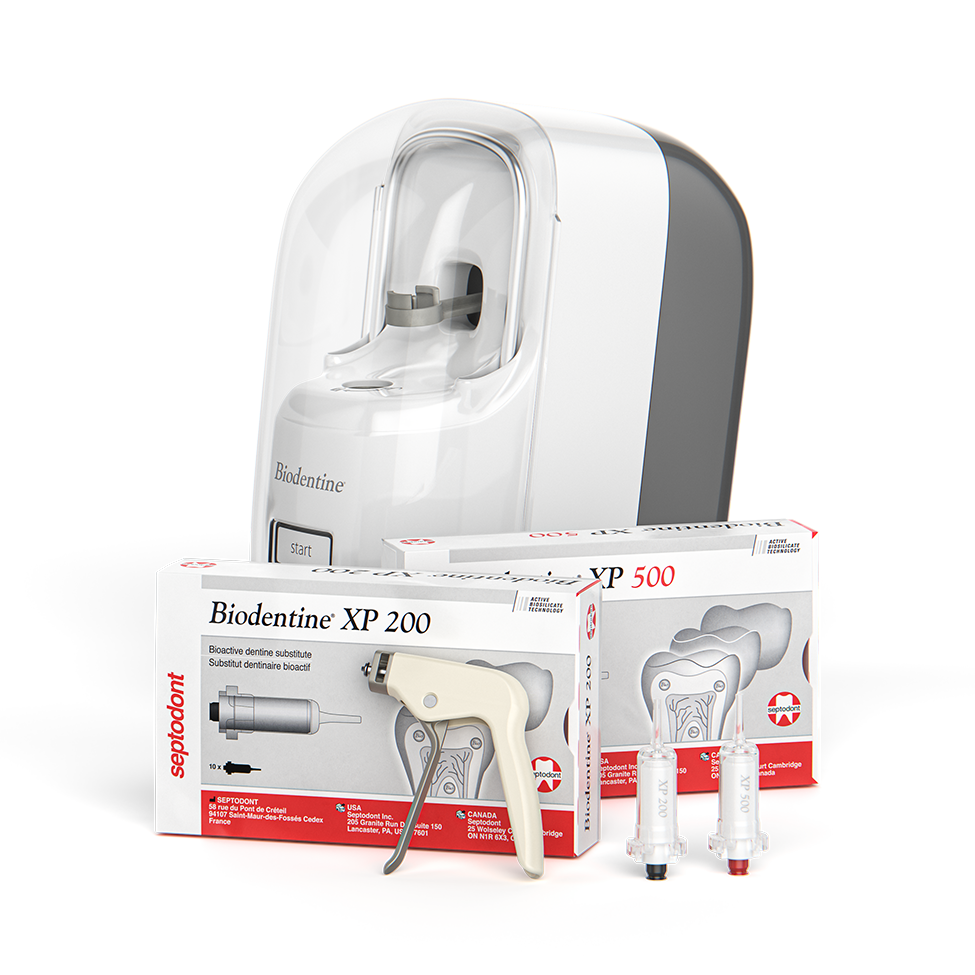 Official product image © Septodont
BIODENTINE VITAL PULP THERAPY IN TRURO
Protecting the living centre of a tooth when decay is very deep
When decay reaches deep inside a tooth, the nerve does not always have to be removed.
In carefully selected cases, vital pulp therapy using Biodentine may help us protect healthy living tissue, seal the tooth and preserve as much natural structure as possible.
What is vital pulp therapy?
The dental pulp is the soft, living tissue in the centre of a tooth. It contains nerves and blood vessels. When decay is very deep, this tissue may become inflamed or may be exposed as the decay is removed.
Vital pulp therapy aims to keep all or part of the pulp alive by removing the tissue that needs to be removed, protecting the healthy tissue and sealing the tooth.
What is Biodentine?
Biodentine is a calcium-silicate dental material designed to act as a dentine substitute. In suitable cases it can be placed close to, or directly over, the pulp before the tooth is restored.
The material is only one part of treatment. Careful diagnosis, clean working conditions, a secure seal and appropriate review all contribute to the outcome.
Symptoms, clinical tests and X-rays guide the decision.
The affected area is managed and Biodentine is placed where suitable.
The tooth is sealed with the appropriate restoration and monitored.
Your treatment journey
Assess
We listen, examine the tooth and use pulp tests and X-rays where appropriate.
Treat carefully
With the tooth numb and isolated, decay is removed carefully and the pulp is assessed.
Protect
If the findings are favourable, Biodentine is placed to protect the remaining vital tissue.
Restore and review
The tooth is restored securely and any recommended monitoring is explained.
When might Biodentine be suitable?
It may be considered when a tooth has deep decay close to the pulp, when the pulp is exposed during treatment, or when removing a small amount of inflamed tissue could allow healthy tissue to be preserved.
We consider your symptoms, examination, pulp tests, X-rays and what we find as decay is removed. The final decision can sometimes change during the appointment.
Not every painful tooth is suitable. If the pulp is too damaged, the tooth cannot be predictably sealed, or infection is present around the root, root canal treatment or another option may be safer.
Early decay and deep decay need different care
Early decay
If minerals have been lost but the enamel surface is still intact, a preventive treatment such as Curodont Repair may be considered after assessment.
Deep decay
If a cavity extends close to or reaches the pulp, Biodentine vital pulp therapy may be considered as part of carefully removing decay, protecting the pulp and restoring the tooth.
What happens?
- We review your symptoms, examine the tooth and discuss the likely options.
- Local anaesthetic is used so treatment can be carried out comfortably.
- The tooth is isolated and decay is removed carefully.
- The pulp is assessed and Biodentine is placed if treatment remains appropriate.
- The tooth is sealed with the restoration judged most suitable.
Review and recovery
The tooth may feel different or mildly tender for a short time. We will give advice specific to your treatment and explain when the tooth should be reviewed.
Please contact us if pain is worsening, lasts longer than expected, wakes you at night, or if you develop swelling.
Vital pulp therapy is intended to preserve living tissue, but healing cannot be guaranteed. Some teeth may later need root canal treatment or another form of care.
Transparent pricing
Examination, X-rays and the final restoration may be charged separately. We will explain the plan and provide a written estimate before treatment.
Frequently asked questions
Is vital pulp therapy the same as root canal treatment?
No. Vital pulp therapy aims to keep all or part of the pulp alive. Root canal treatment removes the pulp from inside the root canals before they are cleaned, shaped and sealed.
Will Biodentine definitely prevent root canal treatment?
No treatment can guarantee this. Some teeth later need root canal treatment or another option despite appropriate treatment and monitoring.
Does the treatment hurt?
Local anaesthetic is normally used. We will check that you are comfortable before treatment begins and can agree pauses at any point.
Will I still need a filling or crown?
Yes, the tooth normally needs a secure final restoration. The type depends on how much tooth remains, where the tooth is and the forces it needs to withstand.
How do you decide whether my tooth is suitable?
We use your symptoms, examination findings, pulp tests, X-rays and the appearance of the tooth during treatment. We will explain the reasonable options and any uncertainty.
What if I have severe pain or swelling?
Please contact us promptly for an assessment. You can also read our emergency dental care information.
Explore restorative dentistry, Curodont Repair or begin with a dental examination.
Could vital pulp therapy help your tooth?
Book an examination or ask our reception team. We will assess the tooth carefully and explain your options without pressure.
Google Reviews
Read the latest independent patient feedback from the same live Google Reviews feed used across our website.
Independent patient feedback
What our patients say.
Recent feedback from patients of The Treatment Centre, updated automatically through Working Feedback.